
I have a 4 to 20mA output pressure sensor, is there a way of converting the current output into a 10 volt output signal so I can use a voltage input data acquisition card?
Typically a 4-20mA output pressure sensor is configured as 2 wire current loop and with this type of signal circuit it is possible to add load resistance without affecting the current signal. At a particular pressure the pressure sensor behaves like a constant current source regardless of the load resistance connected in series to the circuit. If a 500 Ohm load resistor is added in series to the loop circuit, it is possible to generate a voltage drop across the resistor which will vary from 2 to 10 volts according to the current output variation of 4 to 20mA. So a 2-10Vdc output signal can be sent to the data acquisition card connecting the input wires across the load resistor.
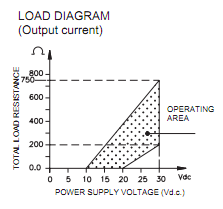 A 4-20mA pressure sensor has a low and high limit of load resistance that must not be exceeded. the limits vary depending on the product type and supply voltage. The resistance limits are normally specified on the product data sheet. This is important to consider since by generating a 2-10Vdc signal you have added an additional 10V max to the circuit which will be deducted for the power supply. Therefore you need to ensure there is sufficient voltage left to power the 4-20mA pressure sensor without exceeding the maximum supply voltage for the circuit.
Featured 4-20ma output pressure sensor products
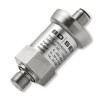 Vacuum Pressure Transmitters - Choose vacuum pressure transmitters for measurements over the low vacuum range of 25 to 760 Torr, using a absolute or negative gauge reference vacuum range.
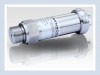 DMP320 0.5 msec Fast Response Pressure Sensor - High frequency response pressure sensor with a better than 0.5 millisecond response time and internal digital signal conditioning that samples readings at a rate of 10 kilohertz.
Related Help Guides
- How do you measure flow rate with a dp cell
- How to Connect a 4-20mA Current Loop Pressure Transmitter
- Advantages and Disadvantages of using a 4 to 20 mA Signal
- Why use 4-20mA and 3-15 psi rather than 0-20mA & 0-15psi
- Supply voltage and load resistance considerations for pressure transmitters
- Choosing calibrator for pressure transmitters
- How to create a list of specification parameters for a pressure sensor
- Transforming a 2 wire Current Loop into a Voltage Output Signal
- What is the difference between a pressure transducer and a transmitter
Related Technical Terms
- 2 Wire
- 3 Wire
- 4 to 20 mA Current Loop Output Signal
- Amplified Voltage Output
- HART®
- Square Root Extraction
- Stainless Steel Pressure Sensors
- Transmitter
- Turndown Ratio
Related Online Tools
- Pressure Transmitter 4-20mA Current Output Calculator
- Flow Transmitter 4-20mA Current Output Calculator
- DP Flow Transmitter Output Calculator
- 4-20mA Signal to Measurement Reading Converter
- SqRt Extraction 4-20mA Signal to Measurement Reading Converter
- Temperature Transmitter 4-20mA Current Output Calculator
- Liquid Level Transmitter 4-20mA Current Output Calculator
- 0-10V Signal to Measurement Reading Converter
- Pressure Transducer 0-10V Voltage Output Calculator
- 4 to 20 mA Supply, Load, Shunt and Signal Calculator
Related Application Questions and Answers
- 16 bar, 200°C steam pressure transmitter and gauge
- Immersible water level sensor for 4 metre deep cold water storage tank
- Submersible rainwater tank level sensor for measuring 3.5m depth
- Air Replacement Plant (ARP) 100 mm H2O differential pressure transmitter
- Ex rated ambient pressure sensor with 800-1100 mbar range
- 20 bar absolute steam pressure transducer
- HART flameproof (Ex d) re-scalable level transmitter for hydrostatic head up to 2 metres
- Dockside sea water tide level transmitter up to 6 metres depth
- Low cost 2 metre high diesel tank level sensor with 0-10 volt output
- 180 degC pressure sensor for saturated steam up to 10 bar
- Mechanical press 1000 bar pressure sensor and panel indicator
- Argon gas compatible pressure sensor for measuring up to 100 mbar
Contact us about this How to get a 10 volt signal from a 4-20mA output pressure sensor page to request more information, or to discuss your application requirements.