
You may not be aware but nearly every pressure measurement device you are using has a positive or negative gauge reference. It is so ubiquitous, that a gauge reference is often assumed and considered the default reference, neither mentioned in specification requirements or on manufacturers data sheets.
Although fundamentally pressure is defined and measured relative to a perfect vacuum in most scientific textbooks, it is impractical in the majority of industrial applications to measure pressure relative to an environment that does not exist naturally anywhere on terra firma. Instead most industrial equipment is located in an environment surrounded by air. To create movement of components on a machine, or to transfer a gas or fluid from one part of a process to another, a pressure has to be applied which is either greater or less than the surrounding ambient air pressure.
Local air pressure is the natural base pressure for all pressurised systems, before they are sealed and isolated from other components. This base pressure has no defined pressure value, and since local air pressure varies constantly, it is necessary to provide a way to track the gauge reference changes, to ensure a pressure reading is measured relative to the base pressure at all times.
The easiest and most practical way to continuously track a gauge reference is to provide a way to vent the reverse side of a pressure sensing device to the surrounding ambient air pressure. This will ensure that any change in the atmospheric pressure during measurement is compensated instantaneously.
Positive gauge pressure is any pressure that is measured above the current atmospheric pressure.
Negative gauge pressure is any pressure that is measured which is below the current atmospheric pressure.
Featured positive gauge pressure measurement products
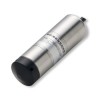 Cooling tower basin water level transmitter - Ensure efficient cooling tower operation with the LMK382 submersible level transmitter. Its low-range measurement capabilities and robust design make it ideal for monitoring basin water levels, preventing pump damage, and optimizing water usage.
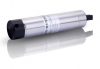 DCL 531 Modbus RTU RS 485 Submersible Stainless Steel Liquid Level Sensor - Digital submersible stainless steel liquid level sensor with a Modbus RTU protocol RS 485 serial bus interface.

Featured negative gauge pressure measurement products
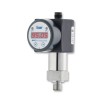 Negative 30 inHg vacuum gauge with 0-10V output - Dual-function vacuum gauge with digital display and 0-10V output for industrial process control and monitoring.
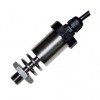 -0.9 to +2.2 bar g Autoclave pressure transducer - This autoclave pressure sensor provides accurate pressure monitoring in medical, pharmaceutical, and industrial sterilization applications. Its robust design and integrated cooling element ensure reliable performance in demanding environments.
If positive or negative is not mentioned when specifying a gauge reference pressure instrument, it is safe to assume that it is a positive gauge range, since the majority of applications require a positive pressure range. A negative gauge pressure range is normally identified in requirements by the way the pressure range is described, such as minus 2 psi or negative 1 bar gauge range.
You will also see something like 10 psi vacuum ranges or vac for short, but this can lead to confusion, since a vacuum range could be defined as an absolute or a gauge reference range, both requiring different types of measurement instrument. If a g, gauge, negative or minus is mentioned as part of the vacuum range description then it is reasonable to assume it is a negative gauge range and not an absolute one.
Featured gauge pressure measurement products
- Storm water detention tank submersible level transmitter for measuring up to 20ft depth - Monitor water levels in storm water detention tanks with the LMK382 submersible level transmitter. This IP68 rated sensor features a 20 ftWG range, 4-20mA output, and a detachable nose cone for easy maintenance.
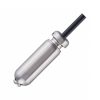 Cost-effective hydrostatic sensor for OEM diesel fuel management systems up to 2 metres - The IMTG is specifically designed for large quantity OEM customers which manufacture and install content management systems for fuel storage tanks.
Related Help Guides
- Measuring liquid level in a sealed tank with a hydrostatic pressure sensor
- Measuring vacuum with negative gauge or absolute ranges
- What is the difference between gauge and absolute pressure measurement
- Measuring vacuum as a negative gauge pressure using a dp sensor
- Can you measure vacuum using a gauge pressure range
- Measuring gauge pressure using a dp sensor
- What does the suffix a, abs, d, dp and diff, g, rel and sg mean after the pressure units in a pressure range?
Related Technical Terms
- Gauge Reference Pressure
- Negative Gauge Pressure
- Reference Pressure
- SG – Sealed Gauge
- Vented Cable
- Vented Gauge
Related Online Tools
- 16 bar, 200°C steam pressure transmitter and gauge
- Vacuum suction sensor & wall mount digital readout with switched contacts
- Stainless steel 316L wetted parts 100 mbar ATEX pressure transmitter
- Industrial dishwasher 0-1m 0-10Vdc water level sensor
- Logger for verifying water supply pressure over 7 days
- Powder filter blockage monitoring pressure transmitter