
Why we mainly use 4-20 mA current and 3-15 psig pressure and not use from zero to 20 mA or 15 psig?
For 4-20mA devices there is a single loop which is used to provide the signal and power to the device. If the signal was zero then there would be nothing powering the device. 0-4mA is used to power the device.
If you have an offset signal at zero reading it is good for failure mode indication: If the signal is 0 mA or 0 psi then there is fault with the equipment.
For a pneumatic 3-15 psi signal it is difficult to control very low pressures accurately with a simple regulator, plus you have to provide vacuum to allow for calibration and measurement hysteresis & repeatability errors.
Featured 4-20ma signal related products
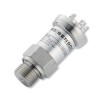 SIL 2 Approved Safety Rated Pressure Transmitters - SIL2 approved safety rated pressure transmitters which have the option for SIL 2 (Safety Integrity Level) certified electronics.
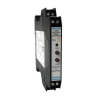 Universal Strain Gauge Bridge Input Transmitter – STRAIN - Simplify your strain measurement setup with the STRAIN Universal Strain Gauge Bridge Input Transmitter. This versatile device converts mV signals from strain gauges, load cells, and pressure transducers into 0-10Vdc, 0-20mA, or 4-20mA outputs.
Advantages of 4-20 mA vs 0-20 mA
- Using 2 instead of 3/4 wires reduces cost of wiring
- Power supply and signal circuit is combined into one
- Distinguish between zero signal and a fault
- Zero offset can be adjusted without need for polarity change of signal
Advantages of 3-15 psi vs 0-15 psi
- Easier to regulate pressure from 3 psi
- No need to provide vacuum when regulating zero signal at 3 psi
- Distinguish between zero pneumatic signal and a pressure failure
Featured 0-20ma signal related products
- Universal Strain Gauge Bridge Input Transmitter – STRAIN - Simplify your strain measurement setup with the STRAIN Universal Strain Gauge Bridge Input Transmitter. This versatile device converts mV signals from strain gauges, load cells, and pressure transducers into 0-10Vdc, 0-20mA, or 4-20mA outputs.
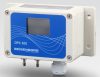 DPS300 User Switchable Pressure Range, Volts or Current Output Low DP Sensor - The DPS 300 is a low range HVAC differential pressure sensor. The lowest possible pressure range is 0...100 pascals. 2 or 3 switchable pressure ranges, plus volts or current output are included with most standard configurations.
Related Help Guides
- How do you measure flow rate with a dp cell
- How to get a 10 volt signal from a 4-20mA output pressure sensor
- How to Connect a 4-20mA Current Loop Pressure Transmitter
- Advantages and Disadvantages of using a 4 to 20 mA Signal
- Supply voltage and load resistance considerations for pressure transmitters
- Choosing calibrator for pressure transmitters
- How to create a list of specification parameters for a pressure sensor
- Transforming a 2 wire Current Loop into a Voltage Output Signal
- What is the difference between a pressure transducer and a transmitter
Related Technical Terms
- 2 Wire
- 4 to 20 mA Current Loop Output Signal
- HART®
- Square Root Extraction
- Stainless Steel Pressure Sensors
- Transmitter
- Turndown Ratio
Related Online Tools
- Pressure Transmitter 4-20mA Current Output Calculator
- Flow Transmitter 4-20mA Current Output Calculator
- DP Flow Transmitter Output Calculator
- 4-20mA Signal to Measurement Reading Converter
- SqRt Extraction 4-20mA Signal to Measurement Reading Converter
- Temperature Transmitter 4-20mA Current Output Calculator
- Liquid Level Transmitter 4-20mA Current Output Calculator
- 0-20mA Signal to Measurement Reading Converter
- 4 to 20 mA Supply, Load, Shunt and Signal Calculator
- Pressure Transmitter 0-20mA Current Output Calculator
Related Application Questions and Answers
- 16 bar, 200°C steam pressure transmitter and gauge
- Submersible rainwater tank level sensor for measuring 3.5m depth
- Air Replacement Plant (ARP) 100 mm H2O differential pressure transmitter
- Ex rated ambient pressure sensor with 800-1100 mbar range
- HART flameproof (Ex d) re-scalable level transmitter for hydrostatic head up to 2 metres
- Dockside sea water tide level transmitter up to 6 metres depth
- Mechanical press 1000 bar pressure sensor and panel indicator
- Argon gas compatible pressure sensor for measuring up to 100 mbar
- Sulfuric acid 12-15% conc. drop-in level probe for 10m high tank
- High reading rate for measuring dynamic pressures to -200psf
- 1013 to 1400 mbar barometric pressure transmitter & readout
- 180°C UHT milk compatible pressure transmitter
Contact us about this Why use 4-20mA and 3-15 psi rather than 0-20mA & 0-15psi page to request more information, or to discuss your application requirements.